Did the assessments demonstrate progress towards the learning goals?
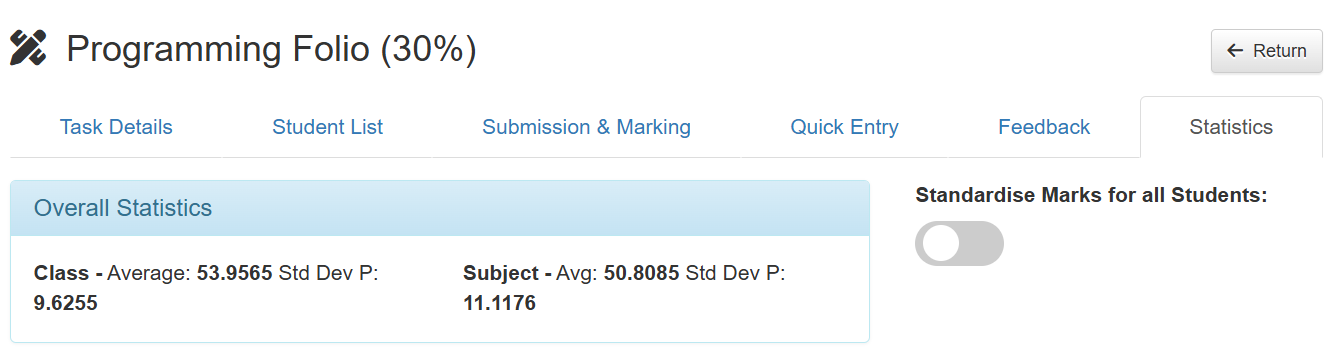
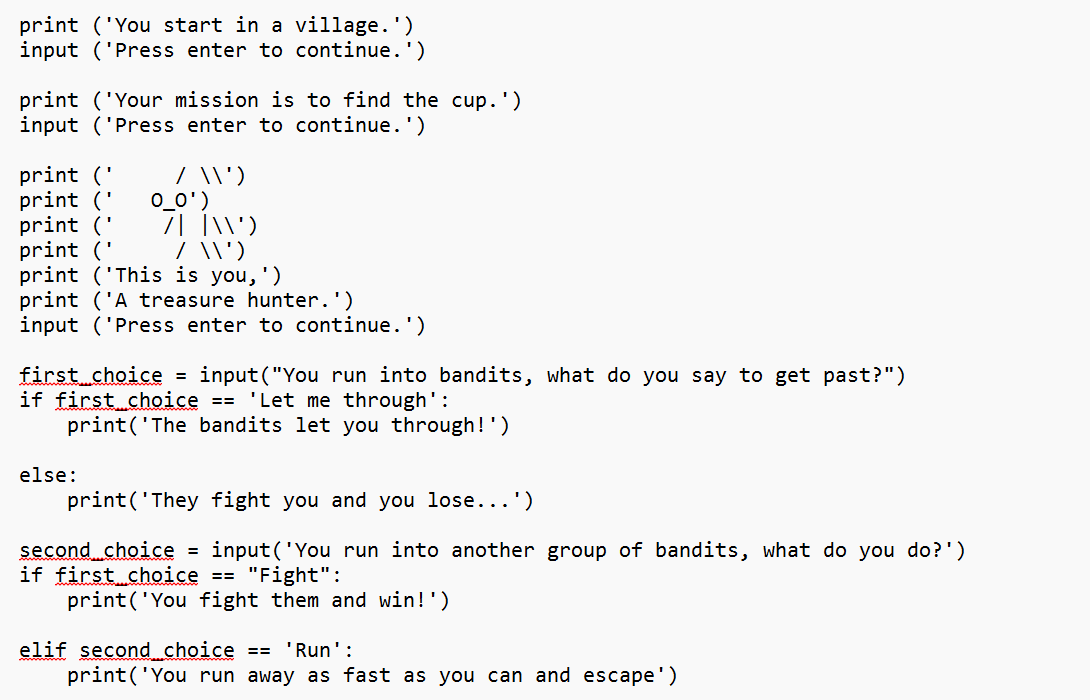
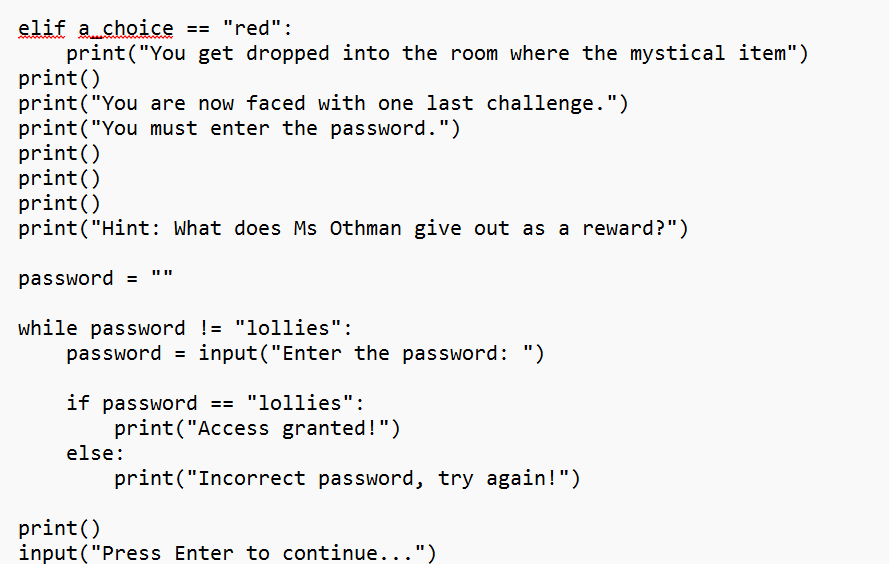
The Inquiry was successful in achieving its intended outcomes. The summative assessment, "The Great Salesian Scavenger Hunt," produced a solid overall class average of 53%, indicating that students across the ability range engaged with and achieved the core programming outcomes of the unit — a pleasing result for a cohort that typically begins this unit with significant apprehension about text-based programming. A number of students achieved outstanding results, including six students who scored full marks, reflecting the depth of learning at the higher end of the class.
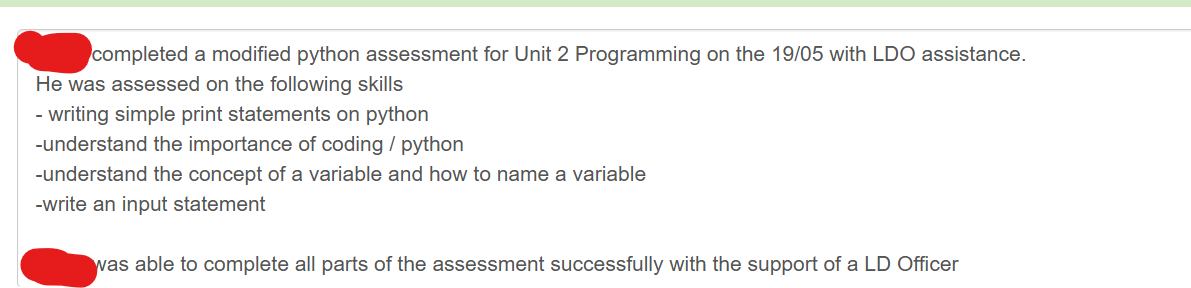
Progress was equally evident among my focus learners. Student A (extension) achieved 100%, having consistently extended his game with more complex logic throughout the unit. Student B (mid-range, initially reluctant about coding) achieved 95% — a strong result for a student who had not previously enjoyed the coding component, indicating a genuine shift in both capability and disposition. Student C (ADHD) achieved 98%, demonstrating that the structured, engaging, game-based approach successfully channelled his flair for the subject into sustained, high-quality work. Student D (PLP) completed a modified version of the assessment and, with some prompting, demonstrated a good understanding of core Python concepts — meeting the goal I had set of accessing the unit and experiencing genuine success with a positive attitude.
Did changes to my practice improve the learning of my learners? How do I know?
Beyond the assessment data, the clearest evidence of impact was the change in students' engagement and confidence — the central aim of the Inquiry. Students gave enthusiastic feedback that Python was far more enjoyable than they had expected, and a notable number have continued to work on and extend their games well beyond the end of the unit, exploring new concepts of their own accord. Most strikingly, when I surveyed students about their favourite unit, the majority nominated Python — not the robotics unit, which is typically assumed to be the favourite because it is hands-on. For students to identify text-based programming, the unit they had most dreaded, as their favourite, is powerful evidence that the gamified approach achieved its core purpose: replacing apprehension with genuine enjoyment and confidence.
I attribute this to specific changes in my practice: framing the entire unit around students building their own game, explicit modelling paired with OneNote as a personal reference, the "ask three before me" peer-debugging routine that built independence, and the strategic use of retrieval-based game tools to consolidate learning and sustain engagement.
What impact did the Inquiry have on my teaching practice, and how will I develop it further?
The Inquiry has had a lasting impact on how I approach the teaching of programming and has given me an evidence-based framework I am confident in. It has also sharpened my use of assessment data to drive future planning. In professional conversation with my colleague Rob Mercer — whose parallel Year 8 class, with fewer complex learning profiles, achieved an even higher average — we identified an important insight: the number of very high results indicates that, while the summative task was well-pitched for building confidence, it was not sufficiently challenging for the strongest students, who found the questions easier than anticipated now that their engagement and skills had grown.
As a result, we have established a clear benchmark and a plan to build on it. For Semester Two, we intend to keep the successful structure of the unit the same — the game-building framework, modelling, scaffolds and engagement strategies — while increasing the challenge of the summative assessment and building more extension into the program, potentially by making the student-created game itself the central assessment vehicle with more complex loops and conditions. Critically, we will maintain the scaffolds and modifications that allowed students requiring support to succeed, ensuring the increased challenge does not come at the expense of access.
Can I share my learning with others?
Yes. Because this Inquiry was developed collaboratively with colleagues teaching parallel classes, its outcomes are already being shared and applied across the Year 8 Digital Technologies program, and the refined approach will inform our faculty's planning for future cohorts. I intend to continue sharing the gamified framework and its supporting strategies with colleagues as a model for engaging reluctant learners in programming.